Song
O Holy Night
A French Midnight Mass carol from 1847, given its English words by an American abolitionist.
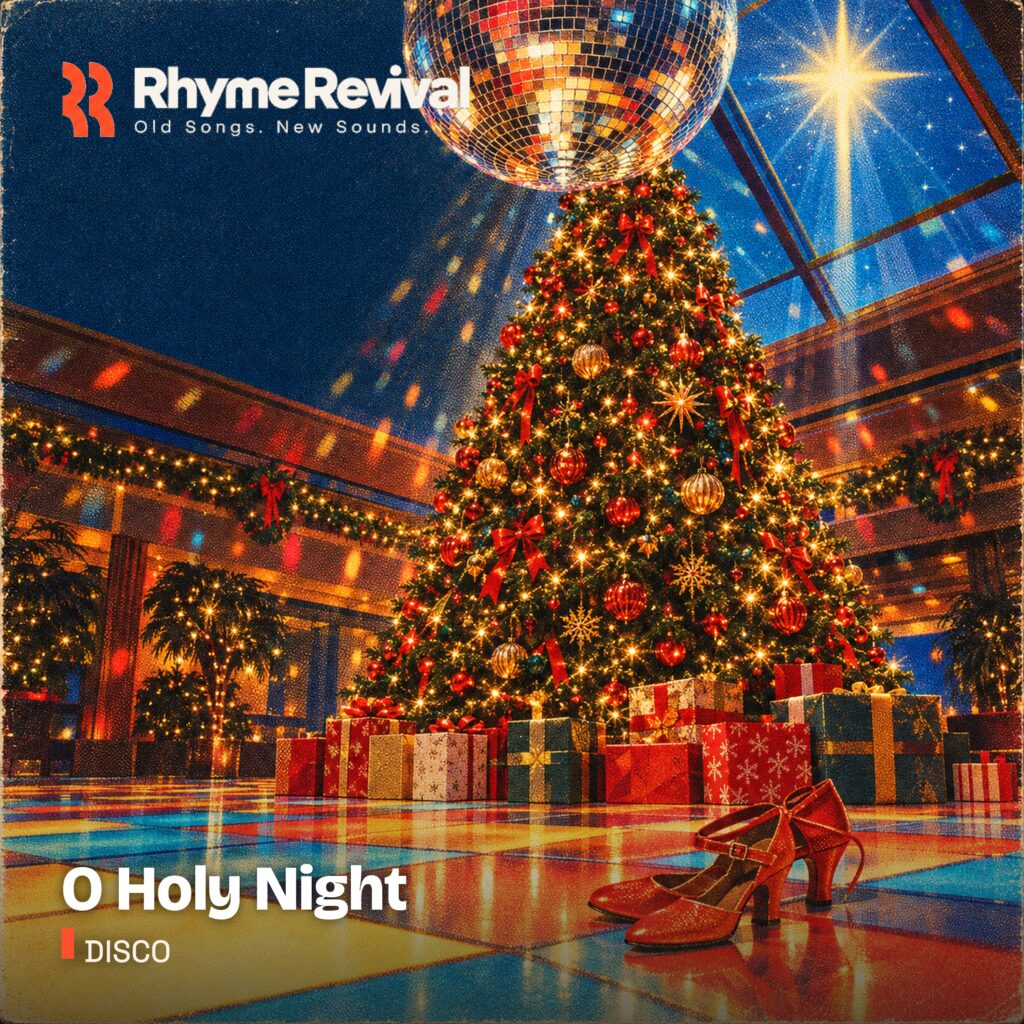
Disco version
O Holy Night (Disco)
Also on
Produced by Rhyme Revival from the traditional public-domain lyrics.
Appears on the album Christmas, Cranked Up
Lyrics
O holy night, the stars are brightly shining
It is the night of the dear Saviour's birth
Long lay the world in sin and error pining
Till He appeared and the soul felt its worth
A thrill of hope, the weary world rejoices
For yonder breaks a new and glorious morn
Fall on your knees, O hear the angel voices
O night divine, O night when Christ was born
O night divine, O night, O night divine
Led by the light of faith serenely beaming
With glowing hearts by His cradle we stand
So led by light of a star sweetly gleaming
Here came the wise men from the Orient land
The King of kings lay thus in lowly manger
In all our trials born to be our friend
He knows our need, to our weakness no stranger
Behold your King, before Him lowly bend
Behold your King, your King, before Him lowly bend
Truly He taught us to love one another
His law is love and His gospel is peace
Chains shall He break, for the slave is our brother
And in His name all oppression shall cease
Sweet hymns of joy in grateful chorus raise we
Let all within us praise His holy name
Christ is the Lord, then ever, ever praise we
His power and glory evermore proclaim
His power and glory evermore proclaim
The story of the song
Minuit, chrétiens
In 1847 a parish priest in Roquemaure, France, asked local wine merchant and poet Placide Cappeau for a Christmas poem, after the church’s stained glass was restored. Cappeau wrote “Minuit, chrétiens” on December 3, 1847, on a coach ride from Mâcon to Dijon. Composer Adolphe Adam set it to music within days, and it was first sung at Midnight Mass in Roquemaure that Christmas.
Dwight’s English words
American critic and minister John Sullivan Dwight wrote the best-known English version in 1855. It is a free adaptation, not a strict translation, and it is the text on our recordings. As an abolitionist, Dwight brought out the lines “Chains shall He break, for the slave is our brother,” which won the carol many friends in the North during the Civil War.
A first on the radio
By 1864 it was sung all over France, in churches and in the street. It is often said to be the first piece of music broadcast on radio, played on the violin by Reginald Fessenden in 1906.
What is uncertain
The claim that Fessenden's 1906 broadcast was the first music on radio is popular but not formally documented. Details of the first printing of the carol are also unclear.
Sources
- https://en.wikipedia.org/wiki/O_Holy_Night
- Adolphe Adam and Placide Cappeau, Cantique de Noël (1847)
- John Sullivan Dwight, English version (1855)
- William Studwell, The Christmas Carol Reader
- Ace Collins, Stories Behind the Best-Loved Songs of Christmas
Explore with AI
Take this song further in your own AI assistant. The prompt below asks for documented history with sources and includes the version you are listening to.
Listener reviews
Write a reviewNo reviews yet. Be the first to share what you think.
More songs
All music
Follow @rhymerevival
Catch new releases, first listens and the stories behind the songs on Instagram and Facebook.
Join the Revival
One email when a new song or genre version is released. No spam, and free downloads never require signing up.